After all this time...
sons and daughters and children and self and story

“After today, we have FOUR more days of school!”
My kids are stoked. I am ambivalent. I am sad. And proud and intrepid and overwhelmed and prepared and excited and exhausted.
I’m sure the parents in the audience of my imaginary nonexistent standup act would agree.
I am hungry for more time with them and starved for time with myself.
Our routines don’t change all that much during the summer, truth be told. We require childcare so we can work (even as I am looking for work, which is a full time job on top of the freelancing). We are lucky to have access to incredible summer camps that we can almost afford. We are lucky there are scholarships to help. We are lucky to be juggling slightly different pickups and dropoffs and not kids at home full-time.
We are lucky to have weather that cooperates most of the time, foggy in the morning and pleasantly warm (and occasionally scorching) (I should be immured to it; after 20 years in the Bay Area, my body seems that seem to forget that I grew up in a desert).
We are so very lucky. And I just want to pause there, instead of moving into the familiar “and yet” narrative structure. Because I’ve been thinking a lot about narrative, lately, and how we’re more in control than we might think.
Point One: Tell A Different Story
While I was unable to attend the full One True Story writing retreat a few weeks ago (ah, soccer and tball and husband’s work schedule), I was able to sneak out for the Friday evening session. I was able to finally meet a few friends IRL who I’d only known online (including the incomparable Sarah K Peck - we have been friends for SIX FUCKING YEARS and had never seen each other outside a Zoom window, can you believe it?!) and reconnect with some I only see in person once or twice a year.
And it meant I got to be in the physical presence of a writer who sometimes feels like a twin soul, the one and only Fay Masterson. When I first encountered her writing in one of Amy’s brilliantly curated writing salons, I fell in love. The way she weaves the highest celestial with the basest humanity is absolutely gorgeous, her words wrapping you up and transporting you dangerously close to enlightenment. I had the honor of being an early reader for a novel she’s developing, and I have her latest in my hands ready to be devoured. Love. Her.
On the evening I attended, Fay was in conversation with another incredible writer, Temi Adamolekun, whose work was new to me but is now indelibly interred deep inside my heart. With Amy’s light facilitation, they talked about story.
And this idea of ownership over our own stories kept coming back, over and over, until I realized it had carved a new neural pathway in my little brain wiggles.
It is essentially this: Think about the story you’re telling yourself, about your circumstances, your pain, your life, your struggles. And remember that you are telling yourself this story. What would it look like for you to tell a different one?
Now, this doesn’t mean you should ignore the reality you’re living in. Temi and Fay weren’t suggesting creating an elaborate fantasy life and deciding it’s real. They weren’t talking about escapism or delusion or disassociation.
What they were suggesting is so much more powerful: finding new stories, within your own truth, that can change the way your brain interacts with your heart.
Let’s be there for a second.
Part Two: Therapy Agrees
My husband and I have seen the same couples counselor on and off since our daughter was born almost 10 years ago. He specializes in parents (and dads, in particular), and he himself is a Jew from Los Angeles married to someone who is not (it’s a particular…thing, I promise). He knows us well.
I hadn’t quite articulated what he’s been trying to tell us for a few months until I got these words from the retreat, but he’s on the same page as Fay and Temi: tell yourself a different story.
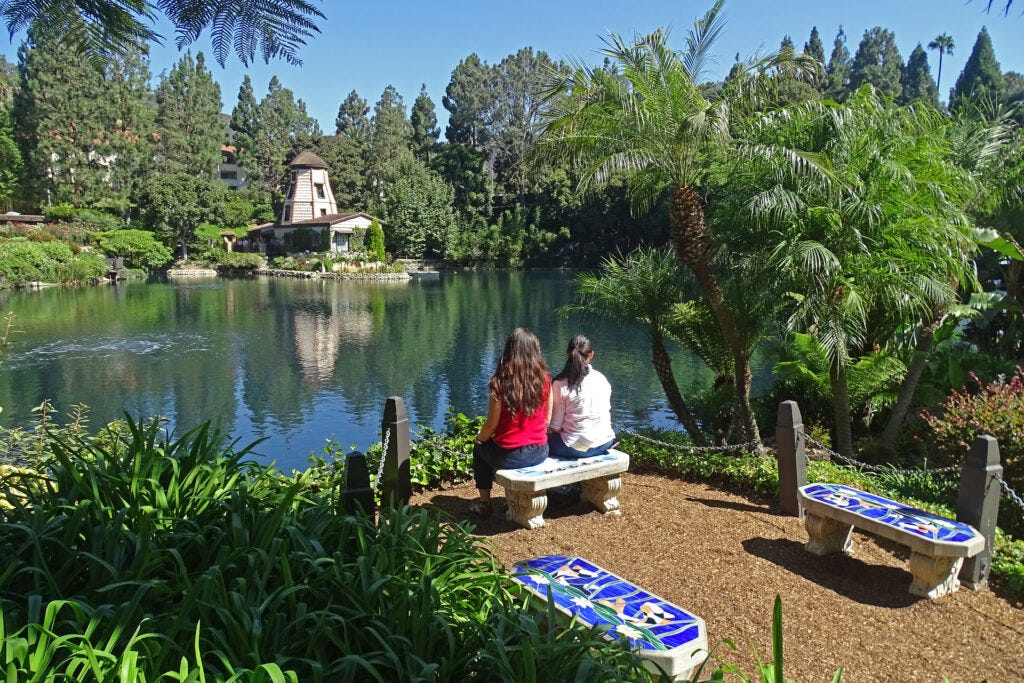
His is a Buddhism-centered approach, which I appreciate (I mean, my family used to take outings to Lake Shrine when I was a kid), but basically comes down to the idea that we can choose to see the negative and let it deeply impact us, or we can choose to see the disappointments as mere facts, and choose instead to dwell on the things that light us up.
You’re not ignoring the pain, you’re choosing to let it carry less weight.
Part Three: When it comes to our kids
It feels like this is where I should say that I’m struggling to impart this wisdom to my children. That I can’t find the words, or I watch them being challenged and wish I knew how to help.
But honestly? I feel like this is something I’m pretty damn good at. I’ve been subconsciously preparing for this the way women spend their whole lives subconsciously preparing for childbirth, with a lifetime of discomfort.
And it’s not easy. It doesn’t work all the time. But I feel like I know how to have these conversations, and since it’s something I’ve only recently put words to, I have a lot of empathy for my daughter who is new to the feelings, not just the words.
Anyone out there have a pre-tween girl? Say, age 9+? Did you also think maybe these Big Feelings About Bodies And Stuff would come a little later? LOL JK.
I should have done the math; she’s the age I was in 4th grade, though she’s just finishing 3rd (fall birthday, plus she did Transitional Kindergarten). And I have very vivid memories of 4th grade, knowing who got boobs first (I won’t name her here, but you better believe I remember) and wondering why our bodies were different. Whether you were bigger or smaller or perfectly average, scrutinizing girls’ development was a part of growing up in the 90’s. And before. And after.
No matter how much body positivity we preach, how much size-inclusive imagery we share, how many books we read or how often we celebrate our own bodies to lead by example (keeping the criticism buried deep in our psyche lest our daughters absorb it through osmosis), it’s already, still, always out there.
Wide legged ripped jeans are back in style, in case you hadn’t heard, and I ordered my daughter a size I thought would fit (larger than her usual size, because it’s Old Navy and they seem to size small). Of course, they were too tight, and I gave her the ole “oh, sizes are so weird aren’t they? the number doesn’t matter, how it feels on your body matters” spiel, and we ordered a size up. Maybe they’ll fit, maybe they’ll be too big.
But as she tried to squeeze the button around her soft belly, she sighed with a knowing beyond her years: “Ugh, why do they think all girls have small, flat bellies?”
Why, indeed.
And so I told her a different story. It’s easy for her (she is me and we are all of us) to default to “I’m pudgy” or “my friends are skinnier than I am” or “my body is wrong/different/bad”. Instead, last night we talked about how we could just order a size up. Choose a brand that has elastic in the waist. Find something different. And yeah, companies are silly for assuming all bodies are shaped the same. They could sell a lot more clothes if they made a wider range of sizes!
It was a 10 minute conversation, max. We were also discussing bathing suits (poor kid, dealing with swimsuits and jeans in one evening, the perils of womanhood) and her observations of her friends’ bodies, and who was wearing training bras and deodorant, and how her tooth was wiggly but not ready to come out yet (there’s a metaphor there).
I do think it helped her in the moment, and to model the carefree, companies are so bad at sizes, aren’t they? let’s figure out what works for us, not what they say we should be attitude feels like progress.
It’s a different story. It’s a true story. It doesn’t mean the other story isn’t also real, just that it doesn’t have to be the only story she knows.
Especially when jeans are involved.
So here we are, with less than a handful of school days left. Continuing on with reorganizing the house, unpacking from camping trips, packing for the next trip, wrapping up a school year, applying for jobs.
My son did his Kindergarten play yesterday (based on Little Blue Truck, in case you’re wondering - he was a sheep), and at bedtime, he burst into tears, crying, “I miss my school play, and my costume, and I’ll never do that play again and I will never wear my costume again!” He was consolable, but barely, adrenaline crashing and exhaustion taking over, on the cusp of change and suddenly having an awareness that time is only moving forward.
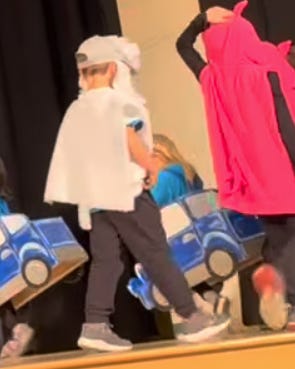
Big stuff for a little guy.
For all of us, no matter how much time we’ve spent learning the lesson.
And in that moment, he didn’t want another story. He didn’t want to be reminded of all the fun he had or what was in store for him next. He wanted to be sad. And so we sat in the sadness, affirming that it’s hard to miss something you love, and that we could just be here in the sads together for a little bit, and that I would hold him until he was ready to change direction.
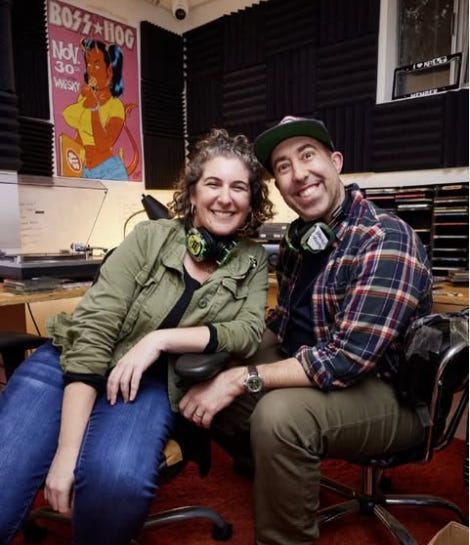
And lastly, as a little treat, I’ve been sitting on this article about my beloved friends Andy and Jeff, aka Mister and Mischief, and I want you all to read it, because they are doing absolutely wonderful work that blends joy and parenting and storytelling and adventure. Everything they do is magic (and a lot of hard work). If I lived in Los Angeles, I would never miss an experience. Even though I generally am terrified of immersive/interactive theater. They make it safe and fun and honestly, a bit transformative. Please do check them out. This is not an ad. I just fucking love them.