Mother Knows Best
A matriarchal version of masculinity, leadership without the patriarchy, and the Dallas Cowboys Cheerleaders.

This is a 10-minute read in three parts. We start with baby steps towards dismantling intergenerational institutional misogyny, get into why the opposite of patriarchy isn’t “more patriarchy, just with women in charge,” and finish with some inspiration from the theatre. A real “Kim” sort of newsletter, it would seem. Enjoy. And
Part 1: The Cheerleaders
I could have sworn I’d written about this last year, but perhaps it was on Twitter, where I no longer hang out. I tried to find my old tweets, and it would seem that my entire posting history has been deleted. Hilarious.
Anyway, The Dallas Cowboys Cheerleaders. An institution I only became familiar with because of the sparkly and addictive Netflix docuseries. I didn’t grow up a football fan, or a cheerleading fan, or a Texan, but I did grow up in the world of theatrical performance, so this whole world is an intriguing spectacular for my dopamine-seeking brain. A sociological experiment with the misogyny and raw talent of dance competitions, and the trashy vibes of a reality show. It’s sisterhood and mean mommies and cotton candy and popcorn and high kicks that end in drop splits. It’s the Rockettes, but aggressively sexy and with heavy Southern charm. Foreign and familiar all at once. Who could resist?

Last season chronicled the team’s fight for fair wages (catnip if you’re paying attention to wage equality and enjoy reading about how different industries suck at HR), when the cheerleaders fought for a 400% pay increase - and won. Time Magazine wrote a whole article about it last year, so I won’t detail it here, but it’s worth a look if you’re at all curious about compensation in the professional cheerleading world.
And it does seem like many of the cheerleaders no longer need to work day jobs (or several) in addition to their DCC jobs, though this this could also be credited to their increasingly prevalent influencer partnerships.
The DCC doing influencer deals isn’t new. They’re already public figures, so they might as well make money from all the objectification and public feedback. But what was interesting to me about Season 3 was that for the first time, leadership had to, on camera, as part of the series, deal with the public perception of the team.
Reality TV and always-on social media comes with a hyper-engaged audience, who can often be critical. And this season, unsolicited feedback from fans who analyze the cheerleaders’ every move on Reddit and TikTok (not to mention the actual stalkers) forced leadership to contend with the team’s mental safety (as well as their physical security).
I’d like to see the DCC to be more visibly specific about how they’re supporting the team’s mental health in addition to the bodyguards and enhanced security, and maybe they do offer counseling or resources in addition to just telling the team not to read the comments. Maybe this is all part of a more holistic team wellness program and we’re just not seeing it yet. There’s always Season 4.
To be humbled but not humiliated, and to declare a commitment to doing better.
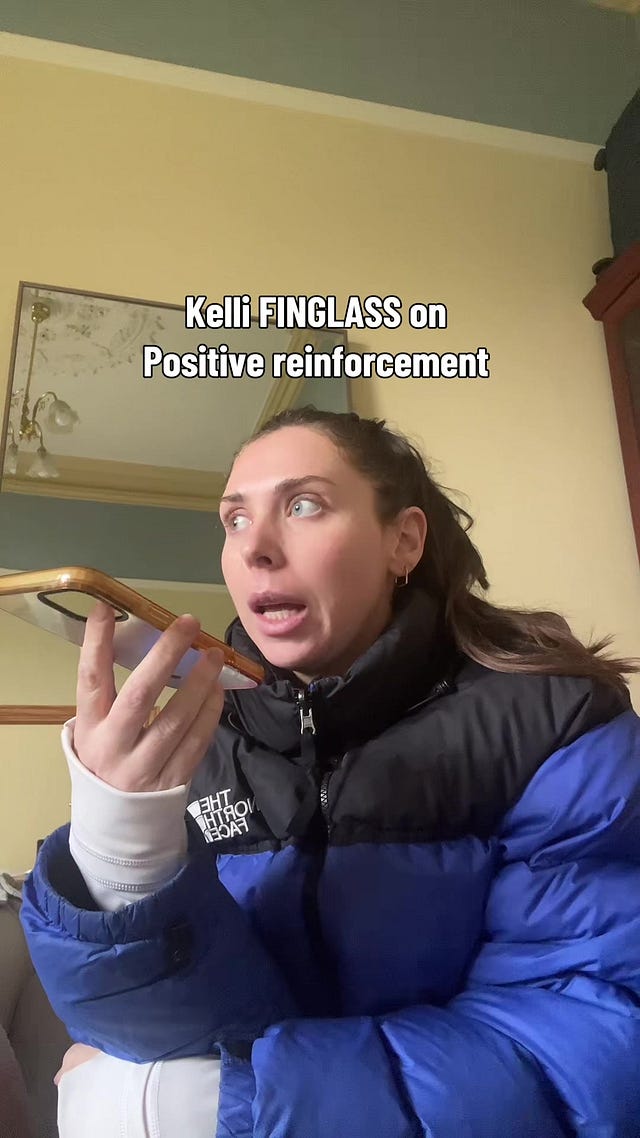
But the women’s mental health is at risk not just because of the fan feedback or online haters. The DCC - as an institution - has a history of toxicity, with coaches using shame and fear as a motivator for everything from choreography to weight loss. Not what we would call A Psychologically Safe Workplace™️. This season, though, it seemed that DCC Director Kelli Finglass finally learned about the concept of positive feedback.
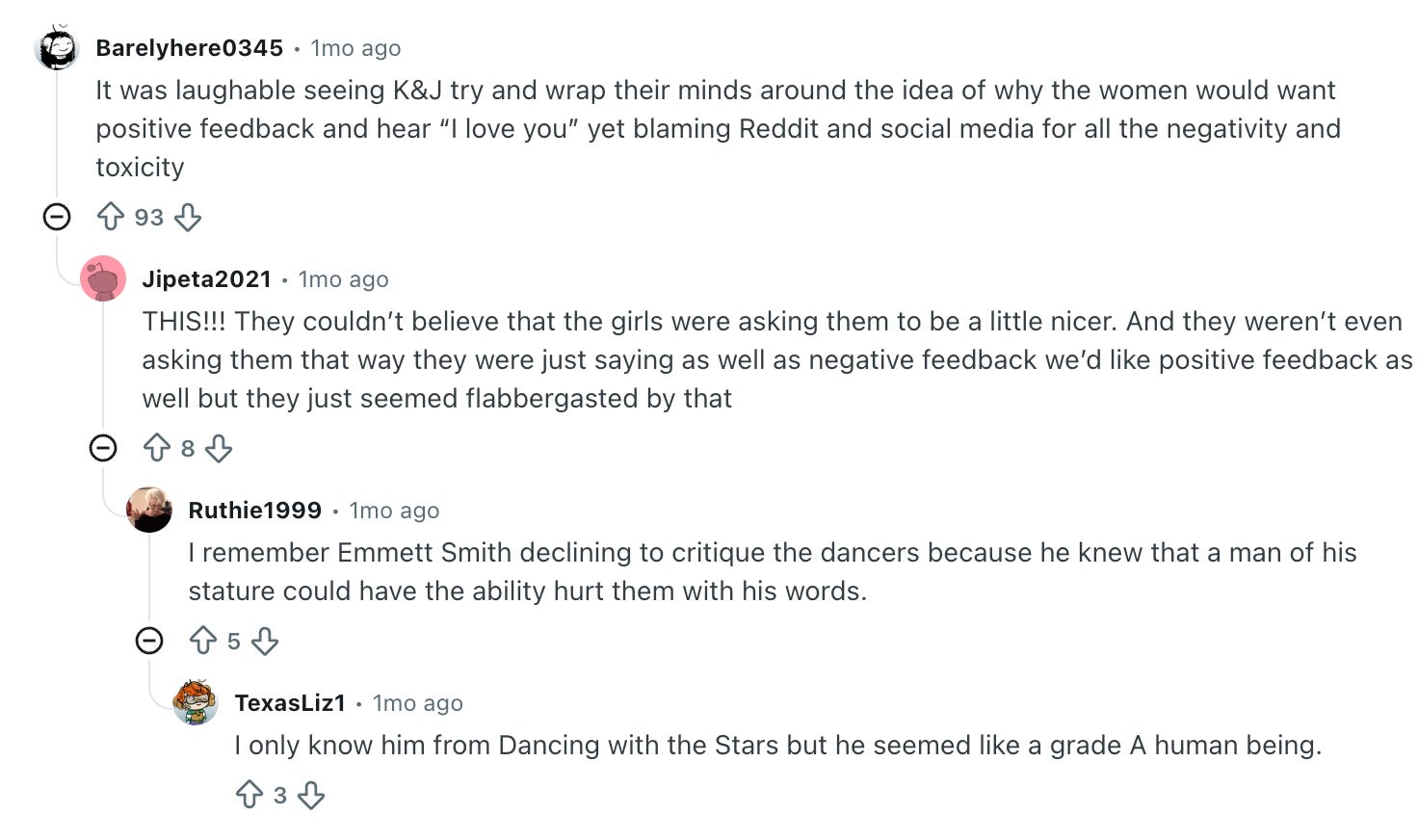
Turns out, young women benefit from feeling safe and appreciated? Who knew? I’ll admit, I got a sarcastic chuckle out of a grown ass woman having an a-ha moment about positive reinforcement. And I’m not the only one.
 Tiktok failed to load.
Enable 3rd party cookies or use another browser
But then empathy kicked in - what kind of upbringing did Kelli have, not to have been taught this lesson of basic human decency? What did she and Judy (the head choreographer) go through when they were DCC back in the day? What did they experience as they grew their careers within the same institution that lifted them up while also breaking them down? Oof.
It’s an incredible thing, though, to see someone be humbled but not humiliated, and to declare a commitment to doing better. I’m really glad that the DCC allowed us this moment of growth, going beyond the (fair) argument that the team should not be reading the social media commentare, and actually listening to the women who spoke up and asked for some positive feedback in addition to the criticism.
Again, these are not complicated ideas. But context matters. The DCC was built on patriarchy (some of Charlotte Jones’ comments last year were disgustingly “I suffered so you should suffer too” in tone) and both Kelli and Judy rose through the ranks of the same harmful environment. What gives me hope is that they seem to be trying to change the system that harmed them, and reckoning with their complicity, too.
Because leadership is more than being in charge. It’s about what you choose to do with your power. Even if it takes a few decades.
Part 2: Matriarchal Manhood
As you may have guessed, I’ve been thinking a lot about leadership lately. I’m out in the mess that is today’s job market, which means I’m researching a lot of companies as I apply for roles that focus on culture and communications…and that means I’m paying extra attention to employer brand, because how a company represents itself to prospective employees speaks volumes about their culture.
Require in-office presence based on the number of miles someone lives from the office rather than what their role entails (or even where the rest of their team is)? That tells me you care more about optics than output.
Spend more time detailing your latest fundraise than talking about the actual impact of your product? That tells me you’re less focused on sustainable longevity than you are on scaling to the next cash infusion.
Specify that you want someone who is willing to work way beyond a typical 9-5? That tells me you don’t value a diverse workforce, and certainly not one that includes caregivers.
I don’t want more women acting like the assholes who are already at the top.
I want the pyramid to be a circle.
The story matters.
And you better believe that it is almost exclusively men (or women still following the BS of Lean In culture) who are perpetuating the competitive workhorse myth of the Ideal Worker.
I was talking to my husband about this in relation to summer camp schedules. Largely, camps run from 9am-3pm, though many offer aftercare until 5:30 or 6pm. Some offer “beforecare” starting at 8:30 or 8:45. This, of course, costs extra.
But what I’ve noticed is that our mornings are so much more joyful with a 9am start time. My pre-tween daughter gets to sleep in until 7:30 or 8am. My son is usually up by 7 anyway, but he gets up and has time to procrastinate as 6 year olds do, motivated into movement by the promise of getting to play video games once he’s fully dressed and ready to go. I even usually have time to eat breakfast before we leave.
There’s research showing that later school times are better for kids, especially teenagers. But we generally can’t start school later because of the standard workday (kids have to be at school at 8am so parents can get to work by 9). We’ve built our whole lives around the needs of the corporations, not the humans. And then in the summertime, we’re screwed, because this is a nation that doesn’t care about caregiving, and seems to forget that there’s no school in the summertime.
We scramble to sign up for camps in January, keeping spreadsheets of budgets and carpools, scramble for coverage and babysitters and aftercare and beg for shorter hours or more flexibility at work, and already we’re trying to plan for after school care in the Fall, because school gets out at 2:20pm and the workday doesn’t end until 5. Or 6.
And that’s if you’re a knowledge worker working somewhat standard hours. My friend Katherine Goldstein has written extensively about this.

The system doesn’t work, but it’s not supposed to work - not for us, anyway.
Because this is a system built on domination, and what I want is mutually-assured success. I want a collective. I want to see paid apprenticeships and actors in repertory. Career mobility and the time to pursue creative projects without monetizing them. I want the next generation to have training programs and open-minded hiring managers and the childcare that will ensure they have the ability to change paths.
I don’t want more women acting like the assholes who are already at the top. I want the hierarchal pyramid to be an equitable circle. Author Samantha Blok recently had a beautiful Instagram post about this (linked below). Please do click through to read all of her delicious words, because they’re very affirming.
The limited minds of the powerful and scared want us to conceive of life in binaries, even though we are not so simple: masculine or feminine, right or wrong, alive or dead (I may have just watched The Princess Bride with my kids, so “mostly dead” is on my radar). Poor Bad, Rich Good, Immigrant Scary, Patriot Hero.
And we can’t fight such simplemindedness with lectures. We have to prove a better way through action. Make it so clearly obvious that funding schools and libraries makes more sense than murdering people in the streets. I’m being facetious, but is this really an exaggeration?
Burning down the patriarchy has to be more than just a catchy t-shirt slogan; it has to be a reckoning that calls upon our deepest connective tissue. To recreate a society that mirrors the survival instincts of our ancestors. Tasks divided according to skill. All roles being valued and honored. Collective care.
I’m inspired by NYC Mayor Zohran Mamdani, who continues to offer us a different kind of masculinity. One that centers partnership, not domination, that understands that politics must shift to collectivism and care.
The Heroine’s Journey asks us to conceive of a victory for all, not just for our main character. And certainly not alone. A matriarchy doesn’t just serve in opposition to the self-obsessed patriarchal power - a matriarch insists upon community. And men are a part of that community, too. But there is no “we” if domination is the goal.
I’m grateful to Tracee Worley for saying it so much better, and for educating me on the Minangkabau society in West Sumatra.
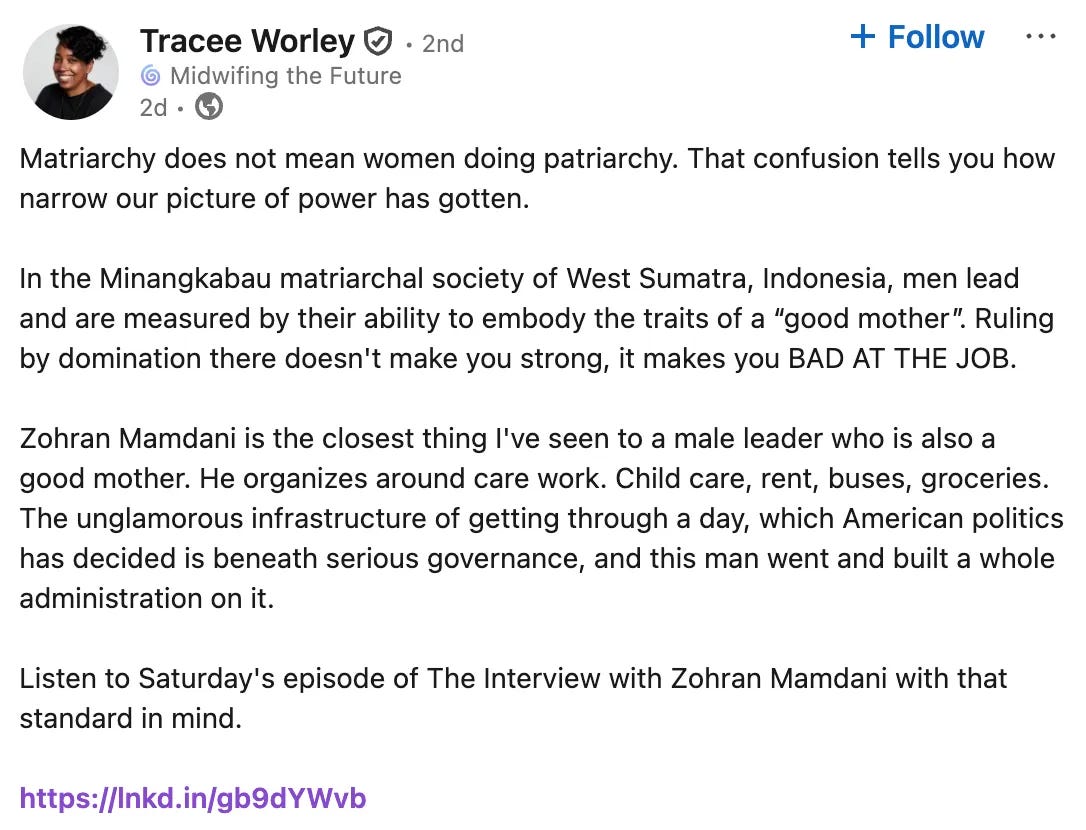
This is it. This is the future, but it also must be our present.
Part 3: Creating a New Reality
We’ve been listening to a lot of Hadestown on our car rides lately, because the pro-shot comes to theaters this weekend and my little theater girlie daughter and I are going to see it and we are so very excited. Neither of us has seen it onstage, but like I said, we’ve been listening to it a lot. Even my six year old son likes it.
Anyway, there’s a line in Orpheus’ toast that’s been sticking in my brain these past few weeks (emphasis mine).
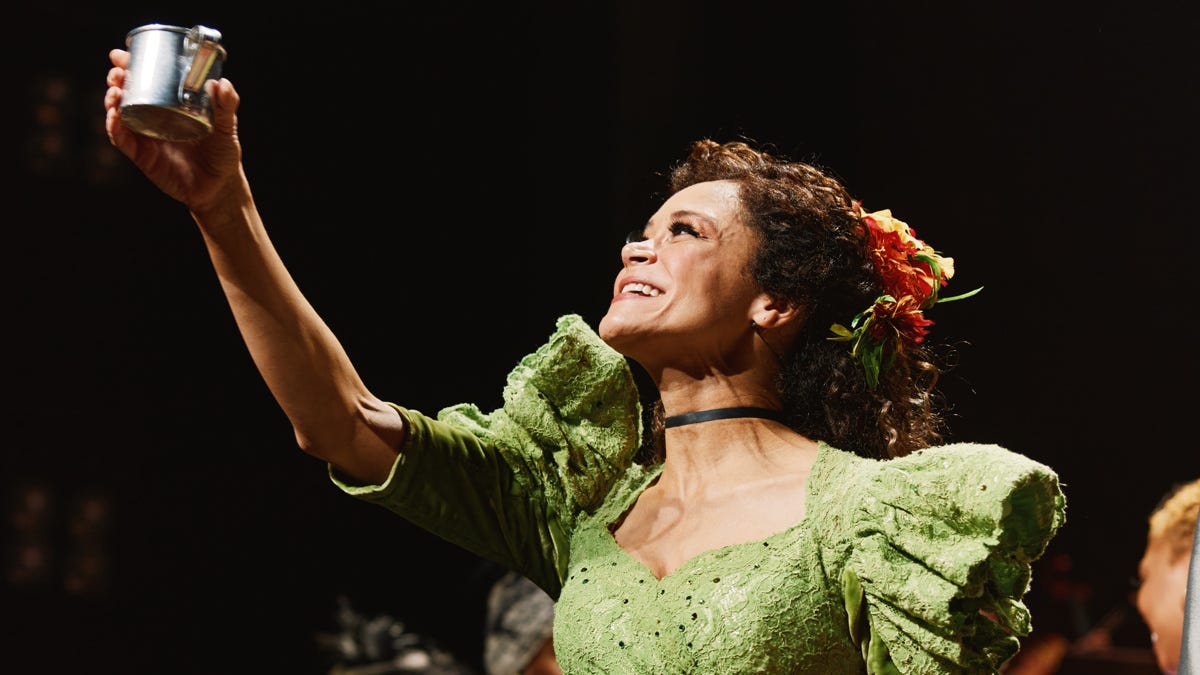
To the patroness of all of this, Persephone, who has finally returned to us with wine enough to share, asking nothing in return except that we should live and learn to live as brothers in this life, and to trust she will provide, and if no one takes too much, there will always be enough. She will always fill our cups, and we will always raise them up.
And when he toasts “to the world we dream about — and — the one we live in now”, I find that I am actually moved to hope. I suppose what the poet’s for, after all. Singing a song to remind us us that Spring will come again.
But while I love to find hope in the lines of a song (or an entire show; yes, we saw Into the Woods again this weekend, and yes, I was moved by teens doing Sondheim, they were great), I also look for hope’s apperance in the real world. I look for the helpers, as Mr. Rogers would say.
I look for people like Haley Massicotte, who is running her business as a collective, and bringing the receipts to her online critics. This is what capitalism looks like under a matriarchy.
And I look at my friend Sarah K Peck, whose latest newsletter featured Hannah Howard’s story about how her relationship to leadership changed, in the context of motherhood. Hannah’s leadership “means tending to what has been entrusted to you,” and isn’t that a beautiful reframe?

But I’ll leave you with this, a beautiful tribute to the late Gavin Creel, Broadway actor and inspirational human. Actor Jay Armstrong Johnson was recently a guest on one of my favorite podcasts (shoutout Casey Balsham), and the way he talked about Creel’s leadership was so moving, I immediately forwarded it to myself so I would remember to include it here, and thanked future BFF Casey for clipping it on her Instagram and making it easy for me ;)
Leadership is about what you give back to the people around you, not about how much you control. Leadership is protection, but it is also peace. It is strength and support, inspiration and evolution. Leadership does not divide - it connects.
So here’s to the leaders who don’t just take feedback, but take action on feedback. Who admit when they’re wrong, even if they’ve been wrong for decades. Who push others to be better by becoming better themselves, and who share the credit with the people who are not in the room.
Here’s to the leaders celebrating the strength and the power that comes from a diverse collective. Who listen and learn and share with humility how far they’ve come. Who make it safe to fail, and who aren’t afraid to lift others up. Who know, but don’t hoard knowledge.
Here’s to the leaders who build a bigger circle.
And may we be them, too.